
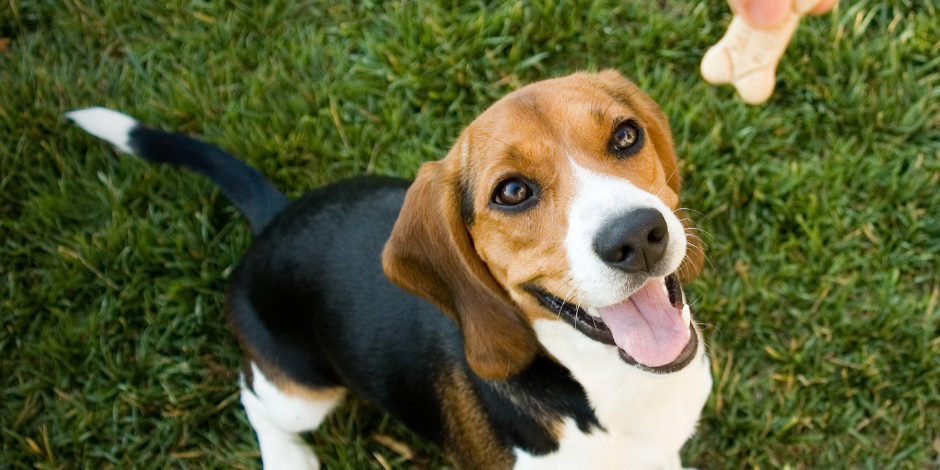
Are treats undoing your pet’s carefully balanced diet?
Those little extras can add up more quickly than you think!
A treat after a walk, a chew to keep your dog occupied, a few scraps from the dinner table or an extra handful of biscuits during training. It doesn’t feel like much, especially when you’re rewarding good behaviour or showing your pet a little affection.
But have you ever considered how much those extras contribute to your pet’s daily food intake?
Our vets explain how treats fit into a healthy diet, why portion sizes matter and how to reward your pet without accidentally overfeeding them.
It’s not just their meals that count
Complete pet foods are designed to provide the nutrients dogs and cats need when fed in appropriate amounts. However, treats, chews, table scraps and food used for training all contribute additional calories.
For example, if your pet has several treats throughout the day, a chew in the evening and a few leftovers from your plate, those extras can become a significant part of their overall intake.
Even small additions can make a difference when they happen every day.
How many treats should your pet have?
A useful general guideline is that treats and other foods that aren’t part of a complete, balanced diet should make up no more than 10% of your pet’s daily calorie intake. The other 90% should come from their complete, balanced food.
This is a guideline rather than a target: some pets, particularly those needing to lose weight or manage a medical condition, may need fewer treats.
The number of treats that fits within this allowance depends on their size and calorie content. One small training treat is very different from a large dental chew or a piece of cheese.
Check the feeding guidance on packaging and remember that different products can vary considerably in calories.
Four common sources of extra calories
1. Training treats
Reward-based training is a great way to teach new skills and reinforce good behaviour. However, repeated rewards throughout a training session can quickly add up.
Try breaking treats into smaller pieces, choosing lower-calorie options or using a portion of your dog’s usual daily food allowance where suitable.
2. Chews and dental treats
Chews can provide enrichment and some products are designed to help with dental health, but they can also contain a surprising number of calories.
Check the manufacturer’s feeding recommendations and factor them into your pet’s overall daily intake. Dental treats should not replace toothbrushing or veterinary dental care.
3. Table scraps
It’s tempting to share a little of whatever you’re eating, but human food can be higher in fat and calories than your pet needs. Some foods are also toxic to pets, including chocolate, grapes and raisins, and products containing xylitol.
If you’d like to offer your pet an occasional food treat, choose something known to be safe for their species and appropriate for their individual needs.
4. Extra portions
It’s easy to underestimate how much food goes into a bowl, particularly when feeding by eye rather than measuring portions.
Measuring your pet’s daily food allowance and taking treats into account can help keep their intake consistent.
How can you tell if your pet is getting too much?
Weight is one part of the picture, but body condition is important too.
Ideally, you should be able to feel your pet’s ribs without pressing hard, see a waist from above and notice an abdominal tuck from the side, although the ideal shape varies between species and individuals.
If your pet is gaining weight, struggling to exercise or you are unsure whether they are at a healthy weight, our veterinary team can help assess their body condition and advise on suitable feeding amounts.
Remember that weight gain isn’t always caused by overfeeding alone. Age, activity levels, neutering, certain medical conditions and medication can also affect weight.
Five simple ways to keep treats under control
- Measure their main meals. Avoid relying on guesswork.
- Plan treats into the daily allowance. Take training rewards from a set portion where appropriate.
- Use smaller pieces. Your pet may value the reward without needing a large treat.
- Check the packaging. Look at calorie content and recommended feeding amounts.
- Keep everyone in the household informed. Agree who is giving treats so your pet doesn’t receive several extra portions throughout the day.
Treats can still be part of a healthy lifestyle
You don’t need to stop rewarding your pet or sharing special moments with them. Treats can be useful for training, enrichment and bonding.
The key is to choose suitable treats, keep portions sensible and remember that every little extra counts.
Not sure whether your pet is at a healthy weight?
Speak to the team at MKVG. We can help assess your pet’s body condition and offer feeding advice tailored to their age, lifestyle and individual needs.