
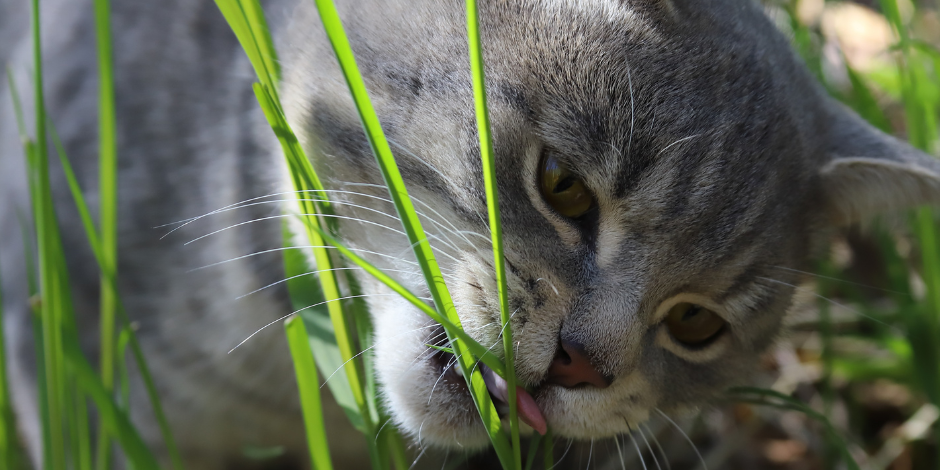
When Eating Grass Causes a Problem: Grass Blades in Cats and Dogs
Many dogs and cats enjoy nibbling on grass, and for most pets, eating a small amount doesn’t cause any problems. However, grass blades can occasionally become lodged in the mouth, throat or other areas, causing irritation and discomfort.
While eating grass isn’t usually something to worry about, it’s important to know what signs to look out for if your pet becomes unwell afterwards.
Why do dogs and cats eat grass?
Eating grass is common behaviour in dogs and cats. There are several possible reasons why they may do it, including curiosity, enjoyment, boredom or simply because they like the taste and texture.
Occasional grass eating is not necessarily a cause for concern. However, if your pet suddenly starts eating large amounts of grass, does so excessively or develops other symptoms, it is worth speaking to your vet.
How can grass cause a problem?
Grass blades can be surprisingly sharp. If swallowed, a blade may occasionally become lodged in the mouth or throat rather than passing through the digestive system normally.
Grass can also become trapped in other areas, particularly around the mouth, nose and paws.
In some cases, a grass blade may cause irritation, inflammation or infection if it becomes embedded in tissue.
Signs to look out for
After your pet has been eating grass, contact your vet if you notice:
- Repeated coughing, gagging or retching
- Excessive swallowing
- Difficulty swallowing
- Excessive drooling
- Pawing at the mouth or face
- Sneezing or repeated rubbing of the nose
- Nasal discharge
- Vomiting
- Loss of appetite
- Lethargy or a change in normal behaviour
- Signs of pain or discomfort
These symptoms can have many causes, so they don’t necessarily mean that your pet has a grass blade stuck. However, they should not be ignored, particularly if they develop suddenly.
Grass seeds can cause problems too
It’s not only grass blades that can cause problems. During the warmer months, grass seeds can become attached to your pet’s coat and can sometimes work their way into the skin, ears, eyes, nose or paws.
Dogs that regularly run through long grass are particularly exposed.
After walks, especially through areas of long or dry grass, it’s a good idea to check your dog carefully. Pay particular attention to:
- Between the toes and around the paws
- Ears
- Eyes
- Nose
- Under the legs
- Areas of long or thick fur
Early removal of a grass seed may help prevent it from causing further irritation or becoming embedded.
What should I do if I think something is stuck?
If you think your pet has something stuck in their mouth, throat, nose or elsewhere, don’t try to force it out if it is deeply lodged or difficult to reach. Attempting to remove an object can cause further injury or may push it deeper.
Instead, contact Milton Keynes Veterinary Group for advice.
At Milton Keynes Veterinary Group, our veterinary team can assess your pet and determine the best course of treatment. Depending on where the grass blade or seed is located, this may involve a straightforward removal or, in some cases, further investigation or sedation to safely locate and remove it.
When should I contact my vet?
If your dog or cat is showing signs of discomfort, repeated gagging or coughing, difficulty swallowing, persistent sneezing, vomiting or a sudden change in behaviour after eating grass, it’s best to seek veterinary advice.
If your pet is having difficulty breathing, this is an emergency and you should contact your vet immediately.
Grass isn’t necessarily the problem
It’s important to remember that eating grass is not automatically a sign that something is wrong with your pet. Many healthy dogs and cats eat grass from time to time without any problems.
The important thing is to be aware of changes in your pet’s behaviour and to recognise when eating grass is accompanied by signs of pain, irritation or illness.
A simple check after walks and keeping an eye on your pet can help you spot potential problems early.
At Milton Keynes Veterinary Group
Our pets have a habit of finding interesting things to eat, chew and explore. While most encounters with grass end without any problems, occasionally something can become stuck and require veterinary treatment.
If you’re concerned that your pet may have swallowed or become stuck with something they shouldn’t have, please contact Milton Keynes Veterinary Group for advice. Our team is here to help keep your pets happy, healthy and safe.