
The Potential Dangers of Ball Throwing: Is Fetch Always Good for Your Dog?
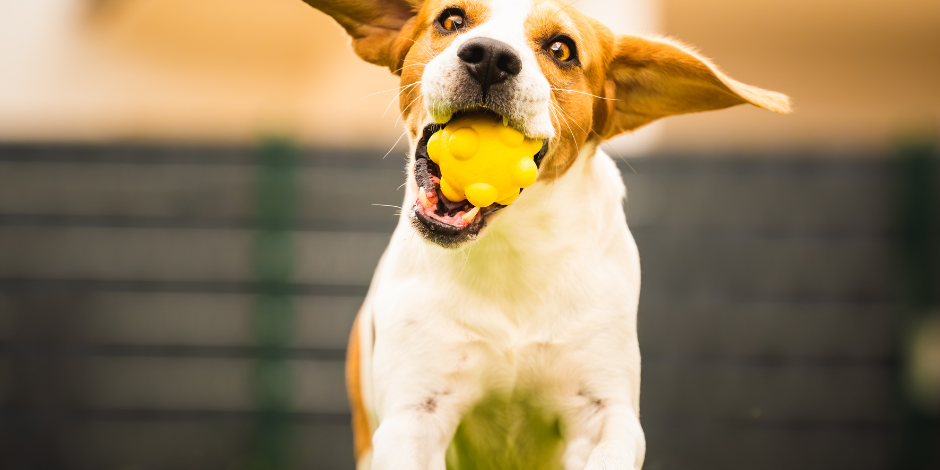
For many dogs, few things are more exciting than chasing a ball. Fetch can be a great way to have fun with your dog, provide mental For many dogs, few things are more exciting than chasing a ball. Fetch can be a great way to have fun with your dog, provide mental stimulation and get them moving.
However, how we play fetch matters. Repeatedly chasing a ball at high speed, particularly when a dog suddenly accelerates, brakes or changes direction, can put considerable strain on their muscles, tendons and joints.
At Milton Keynes Veterinary Group, we often encourage owners to think about the type and intensity of exercise their pets are getting. This doesn’t mean you need to stop playing fetch altogether. Instead, it’s worth thinking about how you throw the ball, how often you play and whether the activity is suitable for your individual dog.
Why can ball throwing be hard on the body?
When a dog spots a ball flying through the air, their natural instinct is often to chase it as quickly as possible.
This can involve:
- Sudden acceleration from a standing position
- High-speed running
- Abrupt stopping
- Sharp turns and changes of direction
- Jumping and twisting
- Repeated sprinting with limited recovery time
These movements can place increased stress on muscles, tendons, ligaments and joints.
A dog may appear perfectly happy to keep chasing the ball even when they are becoming tired. Their excitement can make it difficult for them to recognise when they need a break.
Injuries can happen
High-intensity ball chasing can contribute to injuries, particularly when dogs repeatedly sprint, twist or change direction.
Muscle strains and other soft-tissue injuries can occur, while sudden twisting movements can put additional stress on joints and ligaments.
Some dogs may also be more susceptible to injury because of their age, breed, conformation, previous injuries or underlying orthopaedic conditions.
If your dog suddenly becomes lame, seems painful, is reluctant to move or develops a change in their usual gait after playing, stop the activity and contact your vet for advice.
At Milton Keynes Veterinary Group, our veterinary teams can assess your dog if you’re concerned about a change in their mobility or behaviour following exercise.
It’s not just the running to think about
The ball itself is also worth considering.
Choose an appropriate size
A ball should be large enough that your dog cannot accidentally swallow it. Balls that are too small can present a choking or obstruction risk.
Consider the material
Very hard balls can potentially damage teeth, particularly if your dog repeatedly bites down on them.
It’s also important to regularly check balls and toys for damage and replace them when they become worn or broken.
Don’t let your dog become fixated
Some dogs become extremely focused on chasing a ball and will continue long after they should have stopped.
If your dog becomes frantic, struggles to settle between throws or ignores signs of tiredness, it may be worth changing the way you play.
Don’t forget about overheating
Chasing a ball can be surprisingly intense exercise, especially when repeated over and over.
Dogs can overheat quickly during strenuous activity, particularly in warm weather.
Avoid prolonged, high-intensity games in hot conditions and make sure your dog has access to fresh water and opportunities to rest.
Remember that a dog doesn’t have to be running continuously to become exhausted — repeated sprints can be very demanding.
How can you make fetch safer?
You don’t necessarily need to give up your dog’s favourite game. Small changes can make fetch a more controlled activity.
Try shorter throws
Instead of throwing the ball as far as possible, try shorter throws that don’t encourage your dog to reach maximum speed.
Avoid steep slopes
Running downhill at speed can place additional stress on the body, particularly when a dog is trying to stop or change direction.
Reduce sharp turns
Throwing the ball in a straight line rather than encouraging your dog to make sudden, tight turns can reduce some of the forces placed on their body.
Give them a warm-up
Rather than going straight from resting to sprinting after a ball, start with a gentle walk and gradually increase activity.
Build in rest breaks
A few throws followed by a break can be preferable to continuous high-speed chasing.
Mix up the activities
Fetch doesn’t have to be the whole walk. Sniffing, exploring, training, puzzle toys and calmer games can all provide valuable physical and mental stimulation.
Think beyond the ball
Dogs don’t need to run at full speed to have a fulfilling walk.
Allowing your dog time to sniff and explore is an important part of their enrichment too. Short training sessions, searching games and food puzzles can provide mental stimulation without the same physical demands as repeated sprinting.
For some dogs, a calmer game of fetch with controlled throws may be more appropriate than repeatedly launching a ball as far as possible.
Every dog is different
There isn’t one rule that applies to every dog.
A young, healthy dog may cope very differently with high-intensity exercise compared with an older dog, a dog carrying extra weight, a dog with joint problems or a dog recovering from an injury.
At Milton Keynes Veterinary Group, we can help you understand what type and level of exercise is appropriate for your individual dog, particularly if they have an existing health or mobility concern.
So, should you stop throwing the ball?
Not necessarily.
Fetch can be a brilliant activity when it’s appropriate for your dog. The key is to consider intensity, frequency, the type of ball and your dog’s individual health and fitness.
Rather than throwing the ball as far and as fast as possible, try keeping the game controlled, giving your dog plenty of breaks and mixing it up with other forms of exercise and enrichment.
After all, the goal isn’t simply to make your dog run as fast as they can — it’s to have fun together while keeping them happy, healthy and injury-free.
If you have any concerns about your dog’s mobility, exercise tolerance or an injury following play, please contact Milton Keynes Veterinary Group and our team will be happy to advise you.