
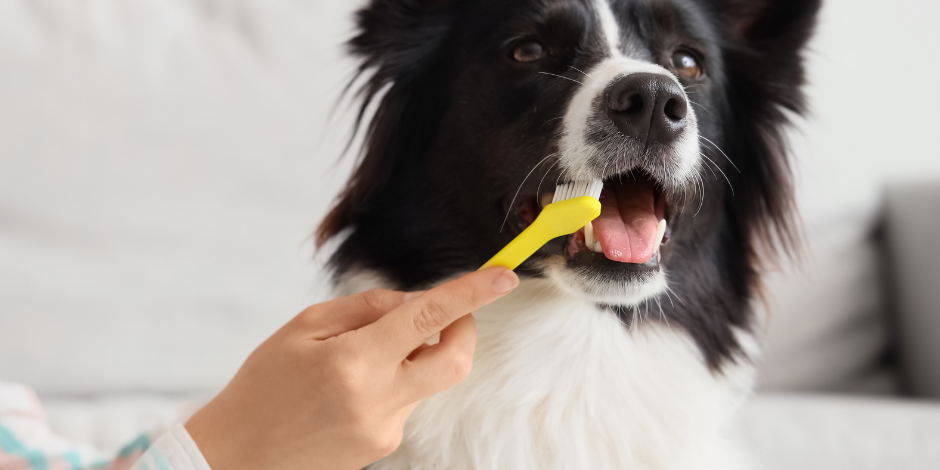
Home Dental Care for Pets: How to Brush Dogs and Cats Safely
At MK Vets, we see first-hand how effective home dental care can prevent painful and expensive procedures later. Brushing at home is the most effective way to control plaque, but it’s important to do it safely and comfortably for your pet.
Research suggests that brushing every other day is the minimum needed to effectively disrupt the biofilm that forms on teeth and prevent plaque from hardening into tartar. Daily brushing is ideal.
Brushing Dogs
- Allow your dog to sniff and taste pet-safe toothpaste.
- Gently lift the lips and brush teeth in small circular motions. Focus on the outer surfaces, where plaque accumulates most.
- Keep sessions short at first and gradually increase duration.
- Praise and reward your dog to make brushing a positive experience.
Brushing Cats
Cats are often more sensitive, so patience is essential:
- Introduce toothpaste slowly and let them lick a small amount.
- Use a soft toothbrush or finger brush.
- Begin with very short sessions and increase gradually over time.
- Stop if your cat becomes stressed — consistency is more important than intensity.
Additional Tips
- Aim to brush daily, or at least every other day.
- Avoid human toothpaste — fluoride and xylitol can be toxic to pets.
- Dental chews, toys, and water additives can support oral hygiene, but they are adjuncts, not replacements for brushing.
A dental health check with our registered veterinary nurses can be invaluable if your pet resists brushing. We can demonstrate techniques, recommend appropriate equipment, and help develop a personalised dental plan.
“Brushing every day is ideal, but even every other day can significantly reduce plaque build-up and improve your pet’s oral health.” — Debbie Kilkenny BVSc MRCVS
Book a FREE dental nurse consultation this March to learn how to brush effectively at home.