
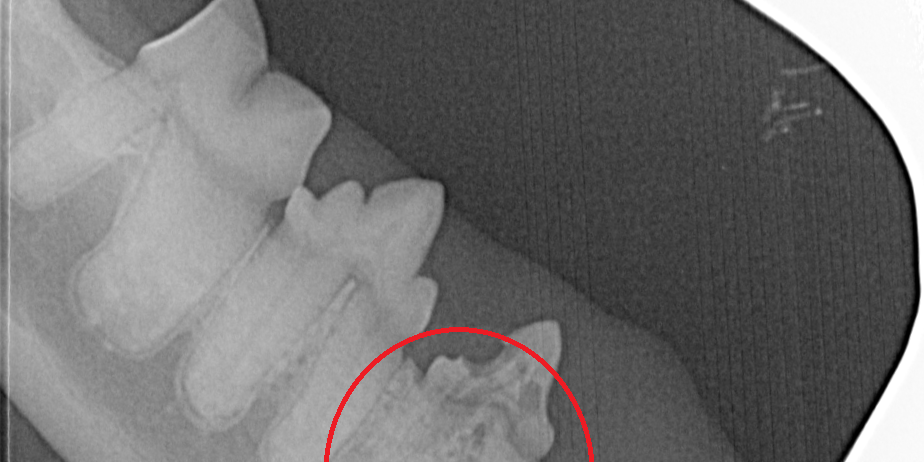
A guide to resorptive lesions in cats
What are resorptive lesions?
Resorption is a process that leads to the destruction of the enamel (the hard outer coating of the crown of the tooth), and dentine (the hard inner layer of the tooth that makes up most of the tooths structure), leading to gradual loss of the tooth itself. This can be a very painful process for your cat, especially once the inner dentine is exposed.
Are there different types?
Not specifically, however your vet may describe them in different ways depending on which part of the tooth is affected.
- Destruction of the crown: This refers to the gingiva (gum) becoming inflamed as the enamel and dentine of the crown (the bit of the tooth you can see) erodes away. This can be seen with the naked eye, providing your cat allows you to look in its mouth that is, and will look like a bit of red gum sitting on the tooth, or even appear as if there is a hole in the tooth
- Destruction of the root: This is where the root of the tooth (the bit that sits in the bone of the jaw) is slowly destroyed and becomes part of the bone of the jaw itself. This cannot be seen by the naked eye as it is a process that occurs below the gumline. To see this your vet will need to take x-rays of your cats mouth, and in some cases teeth that look perfectly healthy on the surface can have significant disease of the root
- Both 1 and 2 at the same time: More often than not there is a level of disease both above and below the gumline
Why does this happen?
There is no clear reason as to why the process of resorption occurs, or any way to determine which cats it will affect. There are several theories involving diet, mineral deficiencies or excesses, and others; but there isn’t strong enough evidence to fully support any of them.
What we do know is that if a cat presents with one resorptive lesion, then they are very likely to get more. We also know that the most common teeth to first show signs are the third lower premolar (the first tooth that appears behind the lower canine, just to confuse things) followed by the third upper premolar (the second tooth to appear behind the upper canine, with the first one being very small and often not visible, just to make things even more confusing!). If these are affected, we will often see neighbouring teeth follow next and spreading out from there.
What to look out for in my pet?
The big thing to look out for, as briefly mentioned before, is a hole or red spot on one of your cats teeth. Now admittedly this may be a bit of food or something else they have picked up on their travels, but if you consistently see it in the same spot then it could be a resorptive lesion.
You also may notice your cat going off their food. This often starts with the hard stuff first as this involves crunching. You might also notice they grind their teeth, rub their face, hiss at their food or show other odd behaviours around eating and their mouths.
If you notice any of these then get your vet to have a look
What do we do if we suspect resorptive disease?
First thing is to get your vet to have a look. Often it is your vet who will notice the problem first, be it during examination at the time of vaccination or at other routine appointment. This is not because the lesion is not affecting your cat, but more down to our cat’s innate ability to hide any issues – or to put it more specifically, them being remarkably subtle about things that bother them. Do not feel bad about missing these problems, it is easily done and your cat is a master at not letting you know how they are feeling at times.
Once your vet has confirmed, or has a strong suspicion of, a resorptive lesion your cat will need a dental procedure. Once the process of resorption has started the only way to fix the problem is to remove the affected tooth, or teeth. This will be done either by removing the whole tooth or by a crown amputation, where the roots have resorbed completely and the remainder of the tooth is removed and the gum stitched closed. The procedure will be performed under anaesthetic, and once completed will make your cat feel a lot happier about their mouth and subsequently eating you out of house and home.
Will it come back?
Resorptive lesions will not come back in the same place as the affected tooth will have been removed, and any remaining resorbing root will become part of the structure of the jaw itself.
It may however occur in other teeth. There is no way for us to say when, or even if, this will happen, but we know the condition is more likely in cats who have experienced it previously. This can lead to your cat requiring subsequent dentals later in life.
How can I prevent this from occurring?
Due to us not really knowing why resorptive lesions occur in the first place, this means we also cannot say for sure how to prevent it. There is a possible link between poor dental hygiene itself and resorption so brushing teeth can be helpful. However, this needs to be done at least every two days to really make a difference, and even still there is a chance your cat will get resorption no matter how often you brush. That, combined with the fact your cat may not like you very much afterwards, means tooth brushing needs to be carefully approached. Speak to our team if you are interested in learning more about brushing your cats’ teeth safely.
Bob Smith
Veterinary Surgeon
BSc BVetMed MRCVS PGCertDent (WBIS)